
How Businesses Can Adapt to Change in the Age of AI Report
A few years ago, the use of artificial intelligence was a nice bonus for progressive companies, while the rest were content with the status quo. However, this option is no longer relevant – today, one can be condemned not to follow trends but to be eaten by them. The problem is that not enough companies know how to effectively adapt to changes in the workplace, led by innovations in the field of artificial intelligence.
However, adaptation does not end with adoption. Many organizations mistakenly believe that holding a license and having an AI product means they have AI-ready everything. Meanwhile, adapting the technological environment is only part of the equation. These considerations and guidelines are given below, which will help in the adaptation to changes in the age of AI.
1. Start with challenges, not technologies
First, it is critical to base activities on problems rather than technology. Many business leaders fall under the trap of the new AI tool and begin immediately looking for its application in the company rather than examining the problem that requires a solution. This approach is wrong since it often turns out that a simple solution can solve the problem without the use of artificial intelligence.
While not every situation requires AI, there is always an area that requires automation. It is essential to take a step back and analyze the current processes to see where and what exactly is required to work. After identifying problem points, it is necessary to move on to the next step.
2. Think about staff, and not only technological capabilities
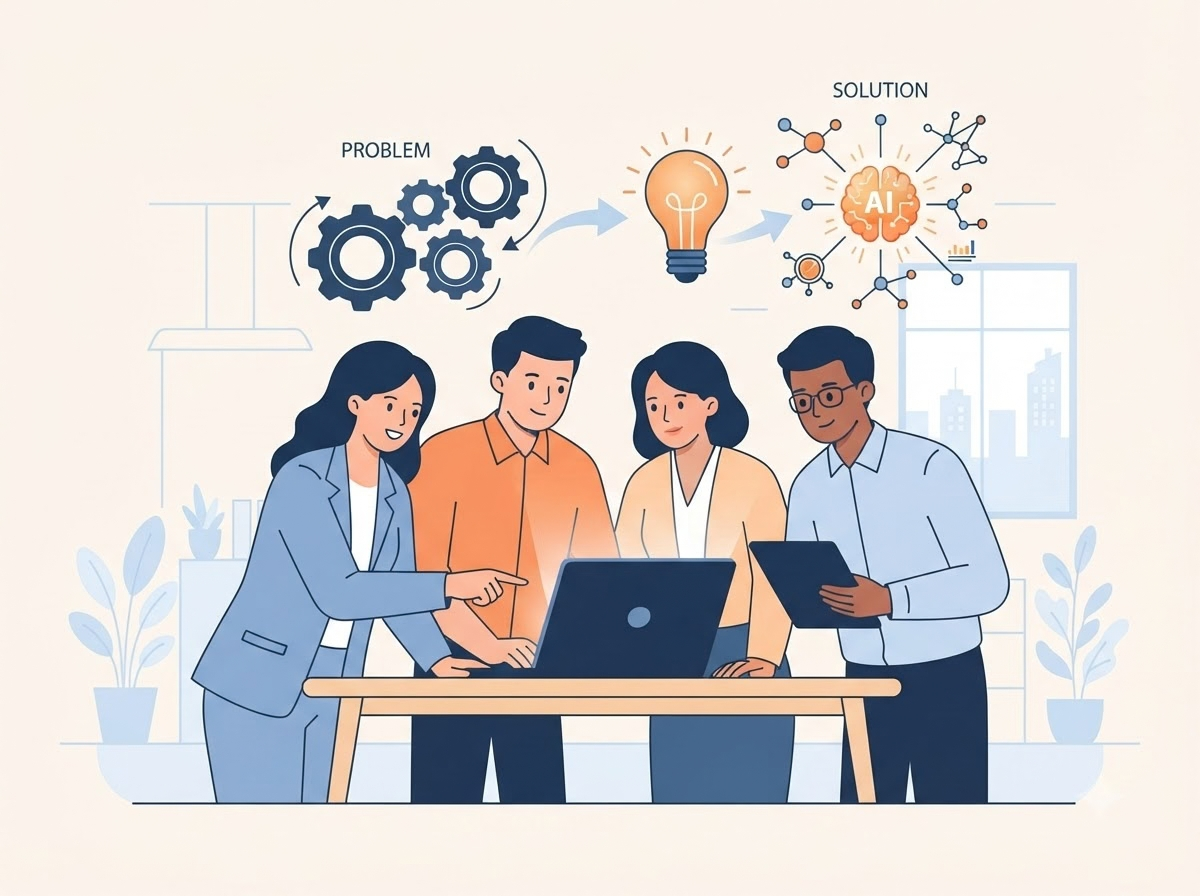
Moreover, to effectively introduce changes based on artificial intelligence, it is crucial to invest in employees rather than tools. One of the most common mistakes of leaders is the lack of preparation of employees for the introduction of new technologies. There are always two camps in enterprises: those who believe that AI is a tool to assist and those who consider it a threat and competitor. The first group turns out to be much more productive and innovative, which is why companies need to invest in employees and help them understand technology.
It is impossible to prepare people for changes simply by providing the latest innovations with an invitation card for a meeting. To ensure that the transition takes place as smoothly as possible, it is necessary to develop training in-house to acquaint employees with specific AI products. Moreover, it is crucial to honestly tell people how work will change. If employees clearly see that some of their responsibilities are being automated, they can understand that they are not being fired and are preparing for new challenges.
3. Create an environment friendly to trials and mistakes
Another crucial step in adaptation to changes in the age of AI is to develop a culture of experimentation. One of the traps of enterprise managers is to plan exhaustive strategy for the utilization of artificial intelligence over months or even years, which significantly delays the project and often causes it to lose relevance. At the same time, companies that have shown the most success in AI are usually those that begin their path with specific experiments.
4. Reconsider not only the number of specialists but their skills
Although working with artificial intelligence tools often seems more complex and time-consuming, localized applications allow enterprises to achieve specific, tangible results without long-term commitments. In other words, the trial and error method is acceptable and should be applied more often when working with AI instead of waiting for an absolutely clear picture. In addition, such an approach can show quicker results with fewer resources. If the experiment failed, the company saves money. If the pilot project were successful, there is reason to celebrate.
As AI requires a culture change in enterprises, adapting to it means rethinking skills and qualification rather than searching for new employees. While specialized computer skills may be in demand for people who know databases, markup languages, and blockchains, ordinary workers can avoid steep learning curves and acquire skills specific to AI technologies.
5. Do not forget about the responsibility of thinking in humans
Usually, it is more cost-effective and less time-consuming for companies to train existing employees than to hire new ones. Moreover, often these workers will have the advantage over newcomers from the position of being familiar with the company’s operations and products. This fact also should be taken into account when selecting AI tools: if the introduction of technology requires significant training of employees, this criterion should be decisive in the choice of a particular solution.
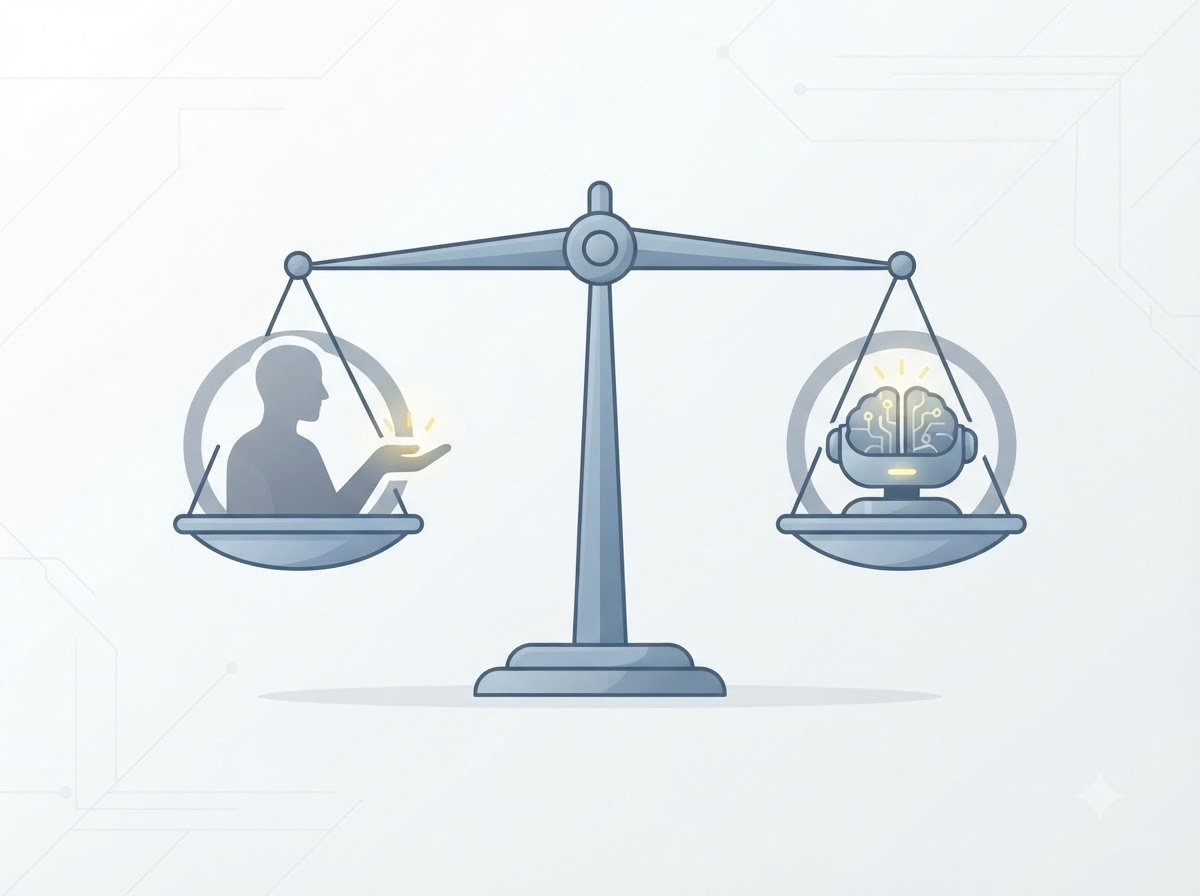
In addition, when introducing artificial intelligence and its applications, it is essential to remember that people need to make complex decisions, while algorithms are excellent at performing standardized actions. Therefore, those companies that take away the responsibility of making the final decision from people will damage their image as an employer and risk losing customers due to incorrect actions.
6. Pay attention to data as one of the key factors of success
Artificial intelligence will not be able to competently assess employees for new jobs, analyze creditworthiness, solve disputes over payments, or conduct negotiations on behalf of the company in principle. Therefore, introducing technology does not mean transferring all responsibilities to it. Even more, managers should separate clearly which decisions should be automated and which require a human touch.
Another essential step in adapting to changes in the age of AI is to invest in data quality. If the company acquires the latest technology and wants to optimize its performance, it is not enough to focus on having the best tools. The quality of an AI result depends not on how high-tech the technologies are but on the accuracy and relevance of the data set. In other words, a business will always receive results that correspond to the input.
7. Stay flexible and constantly update your knowledge and skills
While it is helpful for executives to study which of their data sources are the most valuable and why, this is a process that deserves special attention. In addition, the analysis should be comprehensive: not only data sets but also the data’s integrity, structure, and legitimacy should be examined to see that they are suitable for the purposes of artificial intelligence.
Finally, in adapting to change in the AI age, executives must remember to stay flexible. As time goes by, most if not all specific applications of artificial intelligence will become completely different. New technologies will be absorbed by other industries, and specific use cases will evolve. Therefore, trying to become an AI leader by investing in every new technology at once is a doomed idea. Instead, it is essential to build general flexibility and invest in communication knowledge since these skills will always remain in demand in any organization, no matter how sophisticated the technology is.
To conclude
All this makes it clear that businesses adapting to technological changes led by artificial intelligence are not those that have taken the first step, installed a technology, and stopped. Those companies that will win in the future have a clear idea that innovation is a constant until the end of life and that it is vital to continue to develop and change without succumbing to obsolescence.